
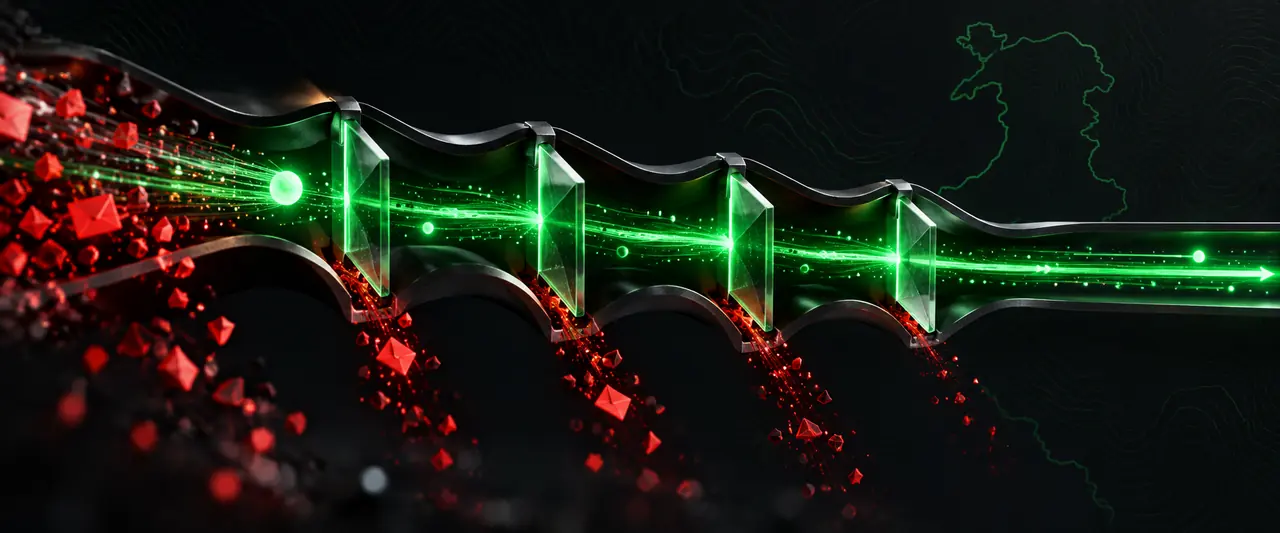
What this means for your business
If your website counts every click on "contact us" as a lead, your reports may be celebrating customers who never actually got in touch.
A click is a useful signal of intent. A received enquiry is a different event. A suitable enquiry and a paying customer are different again.
Set up measurement around those stages. For a form, record success after the submission is accepted, rather than when the visitor presses the button. Google's recommended GA4 event for a submitted lead is generate_lead, but it still needs correct implementation.
Test failures as well as success. A rejected form or broken connection should not produce a successful lead event. Avoid firing the event again just because somebody refreshes a confirmation page.
Do not send names, email addresses or message contents into analytics. The measurement should describe the action without exposing the customer's details.
Useful tracking makes the gaps visible. It should not turn every promising click into an imaginary sale.
Define each stage before configuring events
Start with the business meaning of the action. A contact-button click indicates interest. An accepted form submission indicates a request was sent successfully. A qualified enquiry meets the business's criteria. An agreed job is another outcome, often recorded outside the website.
Write those definitions down so the website, analytics and team reports refer to the same stages. Google's recommended generate_lead event can represent a submitted lead, but naming an event correctly does not make its trigger correct. It needs to happen at the appropriate point in your actual form workflow.
Check failures, duplicates and privacy
Trigger successful submission measurement only after the form is accepted. A validation error or failed request should not be counted as a completed lead. Check whether a page refresh or repeated callback fires the same event again, and distinguish internal test submissions from customers.
Keep personal information out of analytics event values and URLs. Names, email addresses and message contents belong in the appropriate enquiry system, not a general reporting stream. Use tracking in line with the site's consent and privacy arrangements. Analytics will not always capture every action, so maintain a reliable operational record of accepted enquiries.
A practical place to start
- Document click, accepted enquiry, qualified enquiry and customer stages.
- Confirm that success measurement follows actual acceptance.
- Test validation failure, connection failure and repeated confirmation views.
- Reconcile broad trends with enquiry records while accounting for tracking limitations.
How this could look in practice
Illustrative example: a website fires its lead event when the submit button is pressed. Customers who receive a validation error are included as leads. Moving the trigger to accepted submission produces a smaller, more meaningful count. The business can now distinguish form interest from received requests and investigate genuine drop-off without reporting failed attempts as new opportunities.
Where tools and people fit
Use explicit application events and dependable records for success. AI should not guess whether a form arrived or infer customer revenue from a click. Tools can help debug and summarise reports, but the event definition, privacy handling and commercial interpretation need accountable review.
How to judge whether it helped
Compare accepted submissions with the operational record, allowing for consent, blocking and attribution differences. Check qualified enquiries and outcomes separately. Do not promise perfect one-to-one matching where the systems measure different things, and avoid sending personal data merely to make a report easier.
Your next step
Where is the opportunity in your business?
Digital Cymru can help you examine the website, visibility and enquiry processes behind this issue. Start with the free Digital Growth Audit to request a review of your digital presence and discuss useful priorities.
Tell us what work you want more of and where the current journey gets difficult. We can discuss whether the next step is a simple repair, a clearer website or a better process.
Prefer a conversation? Ask us to arrange a call or call 07466 856505.